
CBAM Compliance for Iron & Steel Exporters
Built for India’s Iron and Steel Exporters
- Get ready for EU CBAM
- Track emissions without paperwork
- Get green steel certified easily
- CBAM reporting for steel producers
Book your CBAM compliance service
Trusted by Steel Exporters Across India


































CBAM for iron and steel sector Is mandatory from 2026
Mandatory carbon reporting under CBAM for iron and steel exporters.
Exports at Risk
Non-compliance could block shipments to the EU from 2026
Loss of Buyers
EU importers won’t wait for suppliers who can’t report emissions
Cost Penalties
Default carbon values can raise your product cost by 20–25%
Compliance Pressure
Complex reporting, limited local MRV support
Loss of trade and business
Non-timely CBAM report means loss of trade and sustainable steel production
Iron and Steel Sector-specific CBAM Rules
The sector-specific rules for Iron and Steel under the EU Carbon Border Adjustment Mechanism (CBAM) definitive period include:
Scope and Covered Aggregated Goods Categories
- Sintered Ore (CN 2601 12 00)
- Pig Iron (CN 7201)
- Ferro-alloys (FeMn, FeCr, FeNi)
- Direct Reduced Iron (DRI) (CN 7203)
- Crude Steel (CN 7206, 7207, 7218, 7224)
- Iron or Steel Products (Downstream items under CN Chapters 72 and 73
Direct vs. Indirect Emissions Boundary
- Direct Emissions Only: For almost all iron and steel goods, only direct emissions (Scope 1) are included in the specific embedded emissions calculation.
- Exception for Sintered Ore: Sintered Ore is the sole product in the iron and steel sector where indirect emissions (from electricity consumption) are also included in the calculation.
Monitoring & Calculation Rules
- Emissions Accounting: Direct emissions must capture fuel combustion, reducing agents (e.g., coke, coal, natural gas), process emissions (e.g., limestone/dolomite calcination), electrode consumption (in EAFs), and net measurable heat/cooling.
- Mass Balance Approach: Carbon remaining bound in finished products, pig iron, slag, or carbonaceous waste gases must be calculated using mass balance methodology.
- Precursor Rules: Upstream precursor emissions (e.g., pig iron or DRI used to make crude steel) must be integrated into downstream product calculations.
Production Route Categorization
Classification of steel relies on a mass-balance threshold for the raw materials used:
- BF-BOF Route: Classified when 50% of crude steel mass originates from blast furnace pig iron reduction.
- DRI-EAF Route: Classified when 50% of crude steel mass originates from direct reduced iron.
- Scrap-EAF Route: Classified when 50% of crude steel mass originates from scrap.
Integrated Facility Rules ("Bubble Approach")
- Integrated steelworks producing multiple linked products (e.g., Pig Iron, Crude Steel, Rolled Products) can treat joint or sequential production steps as a single combined process.
- This applies provided intermediate precursors are consumed internally and not sold on the open market.
Specific Sector Reporting Parameters
Annual CBAM declarations for steel products require reporting:
- Mass percentages of key alloying elements (e.g., Manganese, Chromium, Nickel).
- Primary reducing agents utilized in the production process.
- Percentage of scrap metal used in the production batch.
Iron and Steel Sector-specific CBAM Rules
Integrated Facility Rules ("Bubble Approach")
- Emissions data cannot simply be self-reported. All actual embedded emissions calculations must be formally audited and verified by an EU-accredited independent verifier prior to submission in the annual declaration.
Default Values Penalty Structure (If Actual Data Is Missing)
- Non-EU suppliers who fail to provide verified actual emissions data force the EU importer to rely on Commission Default Values.
- Applying default values incurs a mandatory markup penalty above the country-sector average emission intensity: +10% markup in 2026, +20% in 2027, and +30% from 2028 onward.
Authorized Declarant Status & Importer Obligations
- EU importers must apply for and hold Authorized CBAM Declarant status to legally import iron and steel goods into the EU during the definitive period.
- Declarants must submit an Annual CBAM Declaration covering all imports from the previous calendar year.
Financial Surrender & Certificate Buffer Rules
- Importers must purchase and surrender CBAM Certificates equivalent to the total verified embedded emissions, adjusted for EU ETS free allocations.
- Declarants must meet quarterly holding rules: holding at least 50% of cumulative embedded emissions in certificates at the end of every quarter.
Deductions for Carbon Prices Paid Abroad (Article 9)
- Importers may deduct carbon costs effectively paid in the country of origin (e.g., through a local ETS or carbon tax) from their required CBAM certificates, provided the price was legally paid and not rebate-compensated.
De Minimis Thresholds & Exclusions
- Importers are exempt if the aggregate net mass of all CBAM goods imported by that entity remains under 50 metric tonnes per calendar year.
- Scrap and waste iron/steel imported for recycling do not carry embedded emission certificate costs.
Data Retention Mandate
- Non-EU installations and declarants must maintain all primary monitoring data, calculation sheets, and verification reports for at least 6 years following the end of the reporting period.
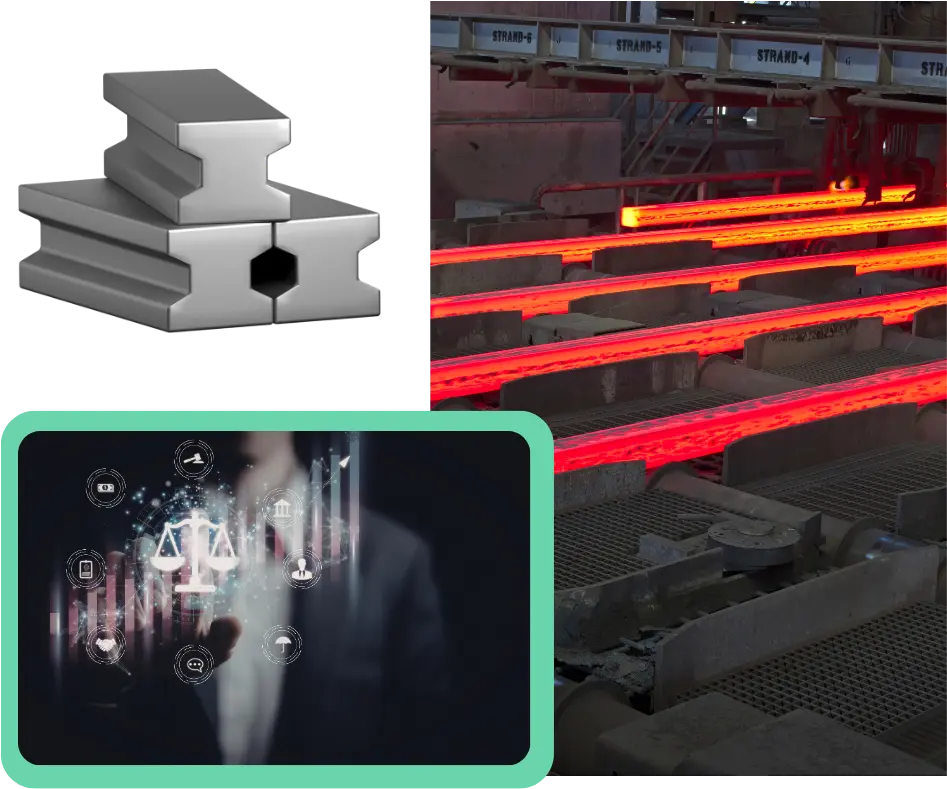
EU Regulation 2026/1963 Mandate for Iron and Steel: Ensuring Compliance for Steel Imports
Overview & Legal Scope
Under Commission Implementing Regulation (EU) 2026/1963 (enacted pursuant to Regulation (EU) 2026/1384), all steel importers entering EU member states must provide verified, auditable proof of the Country of “Melt and Pour” (M&P) and the associated Heat Number.
This requirement complements the EU Carbon Border Adjustment Mechanism (CBAM – Regulation EU 2023/956).In addition to reporting Scope 1, Scope 2, and precursor emissions, importers and non-EU steel mills must provide transparent supply chain verification. Failure to submit compliant TARIC code declarations and supporting evidence leads to immediate customs border rejection.
Key Technical Rules Under Regulation (EU) 2026/1963 for Iron and Steel
Definition of "Melt and Pour"
The original location where raw iron or steel is produced in liquid form inside a furnace and subsequently cast into its first solid state (including melted scrap).
Primary Evidentiary Standard:
The Mill Test Certificate (MTC) serves as the primary document required at import. It must explicitly state:
- The Country of Melt and Pour.
- The Steel Heat Number.
Scope and Covered Aggregated Goods Acceptable Complementary & Standalone Documentation:
If an MTC is missing specific metrics or unavailable, customs authorities evaluate complementary documentation containing TARIC data codes, including:
- Delivery Notes & Invoices
- Long-Term Supplier Declarations & Purchase Contracts
- Factory Cost Accounting & Production Descriptions
- Export Customs Clearances from Origin Countries
| Compliance Requirement | Legal Mandate / Regulation | Primary Proof Needed | Mandatory Data Fields | Customs Enforcement Penalty |
| Melt & Pour Traceability | Commission Regulation (EU) 2026/1963 | Mill Test Certificate (MTC) | Country of Melt & Pour, Heat Number | Immediate Import Rejection & Shipment Blockage |
How CleanCarbon.ai Automates EU 2026/1963 Compliance
- MTC & Heat Number Parsing: CleanCarbon.ai’s automated engine automatically extracts, validates, and archives Heat Numbers and Melt & Pour origin data directly from Mill Test Certificates.
- TARIC Integration: Generates validated TARIC document codes alongside quarterly CBAM XML uploads to prevent border holds.
- Precursor Supply Chain Auditing: Tracks raw billet and melt origin through Tier-1 and Tier-2 supply chains to ensure compliance with both trade safeguards and CBAM standards.

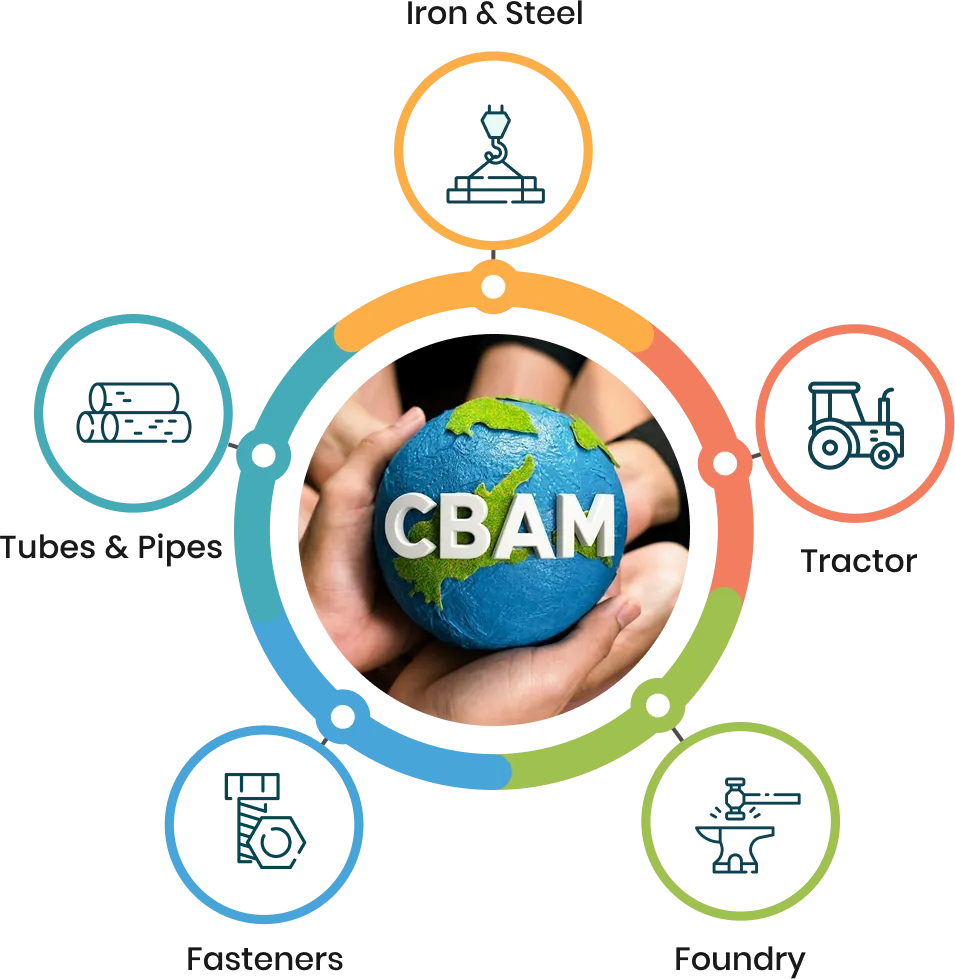
What Is CBAM?
CBAM stands for Carbon Border Adjustment Mechanism. It’s the EU’s way of putting a price on the carbon emissions in products like Fasteners, Tubes & Pipes, Metal-Sheets which are falls under Iron and Steel Industry.
You now need to tell EU buyers how much carbon was used to make your product.
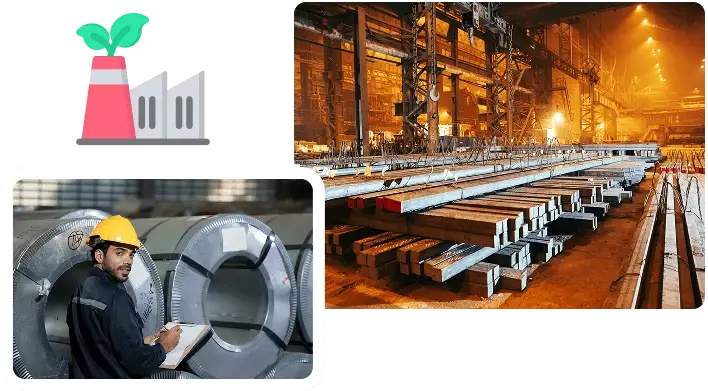
Who Is This For?
- CBAM for iron and steel exporters
- Integrated steel plants
- Re-rolling & secondary units
- Foundries & alloy steel MSMEs
- Exporters of semi-finished or fabricated steel
We support all relevant HSN/CN codes for iron & steel
EU CBAM Covered Goods: Sector Classification & CN Code Scope
| Sector Classification | Combined Nomenclature (CN) Code | Covered Product Scope & Description | Target Greenhouse Gas |
| Iron Ores | 2601 12 00 | Agglomerated iron ores and concentrates (excluding roasted iron pyrites) | Carbon dioxide |
| Iron & Steel (Base) | 72 | Iron and steel (All headings, subject to specific ferro-alloy and scrap exceptions below) | Carbon dioxide |
| Ferro-Alloy Exclusions | 7202 2 | Ferro-silicon | Carbon dioxide |
| Ferro-Alloy Exclusions | 7202 30 00 | Ferro-silico-manganese | Carbon dioxide |
| Ferro-Alloy Exclusions | 7202 50 00 | Ferro-silico-chromium | Carbon dioxide |
| Ferro-Alloy Exclusions | 7202 70 00 | Ferro-molybdenum | Carbon dioxide |
| Ferro-Alloy Exclusions | 7202 80 00 | Ferro-tungsten and ferro-silico-tungsten | Carbon dioxide |
| Ferro-Alloy Exclusions | 7202 91 00 | Ferro-titanium and ferro-silico-titanium | Carbon dioxide |
| Ferro-Alloy Exclusions | 7202 92 00 | Ferro-vanadium | Carbon dioxide |
| Ferro-Alloy Exclusions | 7202 93 00 | Ferro-niobium | Carbon dioxide |
| Ferro-Alloy Exclusions | 7202 99 10 | Ferro-phosphorus | Carbon dioxide |
| Ferro-Alloy Exclusions | 7202 99 30 | Ferro-silico-magnesium | Carbon dioxide |
| Ferro-Alloy Exclusions | 7202 99 80 | Other ferro-alloys | Carbon dioxide |
| Scrap Exclusions | 7204 | Ferrous waste and scrap; remelting scrap ingots of iron or steel | Carbon dioxide |
| Steel Products | 7301 | Sheet piling of iron or steel; welded angles, shapes, and sections | Carbon dioxide |
| Steel Products | 7302 | Railway or tramway track construction material of iron or steel (rails, switch blades, sleepers, fish-plates, sole plates, bedplates) | Carbon dioxide |
| Tubes & Pipes | 7303 00 | Tubes, pipes, and hollow profiles, of cast iron | Carbon dioxide |
| Tubes & Pipes | 7304 | Tubes, pipes, and hollow profiles, seamless, of iron (other than cast iron) or steel | Carbon dioxide |
| Tubes & Pipes | 7305 | Other tubes and pipes (welded, riveted, or closed), circular cross-section, external diameter > 406.4 mm | Carbon dioxide |
| Tubes & Pipes | 7306 | Other tubes, pipes, and hollow profiles (open seam, welded, riveted, or closed), of iron or steel | Carbon dioxide |
| Piping Accessories | 7307 | Tube or pipe fittings (couplings, elbows, sleeves), of iron or steel | Carbon dioxide |
| Structural Steel | 7308 | Structures and parts of structures (bridges, lock-gates, towers, doors, windows, frameworks, pillars, columns), prepared plates, rods, angles, shapes, and tubes | Carbon dioxide |
| Storage Containers | 7309 00 | Reservoirs, tanks, vats, and similar containers, capacity > 300 L (without mechanical/thermal equipment) | Carbon dioxide |
| Storage Containers | 7310 | Tanks, casks, drums, cans, boxes, and similar containers, capacity ≤ 300 L (without mechanical/thermal equipment) | Carbon dioxide |
| Gas Containers | 7311 00 | Containers for compressed or liquefied gas, of iron or steel | Carbon dioxide |
| Fasteners & Hardware | 7318 | Screws, bolts, nuts, coach screws, screw hooks, rivets, cotters, cotter pins, washers (including spring washers), of iron or steel | Carbon dioxide |
| Articles of Steel | 7326 | Other articles of iron or steel (not elsewhere specified) | Carbon dioxide |
Hear from Exporters Like You

– Team P.S. Steel Tubes

CleanCarbon.ai transformed our EU export compliance by streamlining CBAM reporting for our steel pipes and hollow sections. Their automated platform simplified complex Scope 1 and Scope 2 emissions tracking across our manufacturing facilities. By converting our raw operational data into EU-standard XML reports, they ensured seamless acceptance by European importers while saving us weeks of manual calculations.
– Management Team, Sunrise Multi Tech Fasteners / Stefaco
Navigating CBAM requirements for high-precision bolts, nuts, and industrial fasteners was daunting until we partnered with CleanCarbon.ai. Their platform mapped our manufacturing processes—from wire rod processing to heat treatment—to generate accurate direct and indirect carbon emissions data. Their automated reporting gave our European distributors total compliance assurance.


CleanCarbon.ai has been an essential partner in safeguarding our European market share for precision fastener manufacturing. Their software seamlessly integrated with our production logs to calculate precursor emissions, ensuring precise, audit-ready CBAM communications without disrupting our daily manufacturing schedule.


Meeting complex EU climate regulations for our premium bolts, nuts, and industrial fastenings became effortless with CleanCarbon.ai. Their expert team mapped our entire supply chain emissions profile, giving our European buyers verified, cost-effective compliance documentation.
4 Easy Steps to CBAM Compliance service

01

Send us your plant and
energy details

02
We calculate emissions
automatically

03
You get quarterly
CBAM reports

04
You stay export-ready,
always

Your All-in-One CBAM Partner
We take care of everything, so you don’t have to worry.
- We calculate your carbon emissions
No manual work. Just share basic data – we do the rest.
- Get ready-to-use CBAM reports
Send them directly to your EU buyers/importers.
- Report per product (HR coils, billets, bars, etc.)
So you stay compliant for every item you export.
Why Choose CleanCarbon for CBAM for iron and steel sector?
Feature
Automatic Emissions Tracking
Ready CBAM Reports
Affordable for MSMEs
Verified by Experts
Export Dashboard
Manual Process
 No
No
No
Costly
Had to get
Not available
Clean Carbon
 Yes
Yes
Yes
Yes
Yes
Live view
FAQ
What is CBAM for the iron and steel sector?
The Carbon Border Adjustment Mechanism (CBAM) for the iron and steel sector is a European Union initiative designed to ensure that imported steel products are subject to the same carbon costs as those produced within the EU. It aims to prevent carbon leakage, promote low-carbon manufacturing, and encourage exporters to measure and reduce emissions from their production processes.
How does CBAM reporting work for steel producers?
Under CBAM, steel producers exporting to the EU must report the carbon emissions embedded in their products.
The process includes:
- Collecting data on direct and indirect emissions from manufacturing.
- Calculating total emissions per tonne of product.
- Submitting quarterly CBAM reports through the EU portal.
CleanCarbon helps steel producers automate these calculations, maintain accurate emission records, and stay compliant with EU requirements.
How is the cost calculated for CBAM reporting in the steel industry?
CBAM costs are based on the carbon intensity of the exported products and the EU Emission Trading System (ETS) carbon price.
In simple terms:
CBAM Cost = Embedded CO₂ Emissions × EU Carbon Price (€/tonne CO₂)
If the exporter’s home country already applies a carbon tax, that amount can be deducted from the total CBAM charge. CleanCarbon’s reporting tools provide clear, transparent cost estimates based on verified emission data.
What documents or data are steel producers required to provide under CBAM?
Steel producers must provide detailed production and emission data, including:
- Energy and fuel consumption records.
- Material input and output data.
- Process-specific emission factors.
- Production volumes per product type.
- Third-party verification reports (if applicable).
CleanCarbon assists exporters in compiling, validating, and formatting these datasets for EU submission.
What are the penalties for non-compliance in the iron and steel sector?
Failure to comply with CBAM regulations can result in:
- Financial penalties for each tonne of unreported emissions.
- Suspension or rejection of CBAM reports.
- Loss of access to EU markets.
The EU imposes strict reporting timelines, and repeated non-compliance can severely impact trade relationships and brand reputation.
How will CBAM affect competitiveness and pricing for steel exporters?
CBAM will influence pricing by increasing costs for high-emission products, encouraging exporters to adopt greener production technologies. However, exporters that implement low-carbon practices can gain a competitive edge in EU markets, where sustainability is increasingly valued. CleanCarbon helps companies model potential pricing impacts and optimize emission performance to remain competitive.
How often do steel producers have to report under CBAM?
During the transitional phase (October 2023 – December 2025), exporters must submit quarterly CBAM reports detailing product emissions and quantities. From January 2026, companies will need to purchase and surrender CBAM certificates annually based on verified emissions.
Where can steel exporters go for help with compliance services for CBAM?
Steel exporters can partner with CleanCarbon.ai, India’s leading CBAM compliance and reporting platform.
We offer:
- Automated emission data collection.
- Verified CBAM calculation models.
- Quarterly reporting support.
- End-to-end guidance for EU compliance.
Latest Article & Blog

CBAM reporting requirements becomes mandatory from January, 2026 and its financial impacts can be seen on EU importers and exporters....
EU CBAM has started to impact more sectors within the iron and steel category. For example, cbam fasteners has emerged...
CBAM 2026 has many mandatory rules for exporters during the definitive phase. In this blog, the Ministry of Commerce and...