
Turning Climate Action into Market-Ready Carbon Assets
- Carbon Credit Trading
- Climate Advisory
- Environmental Attributes
- Carbon Project Development
- International Carbon Markets
Connecting projects, businesses and markets to create credible, commercially viable climate solutions.
Explore Our Carbon Credit Solutions
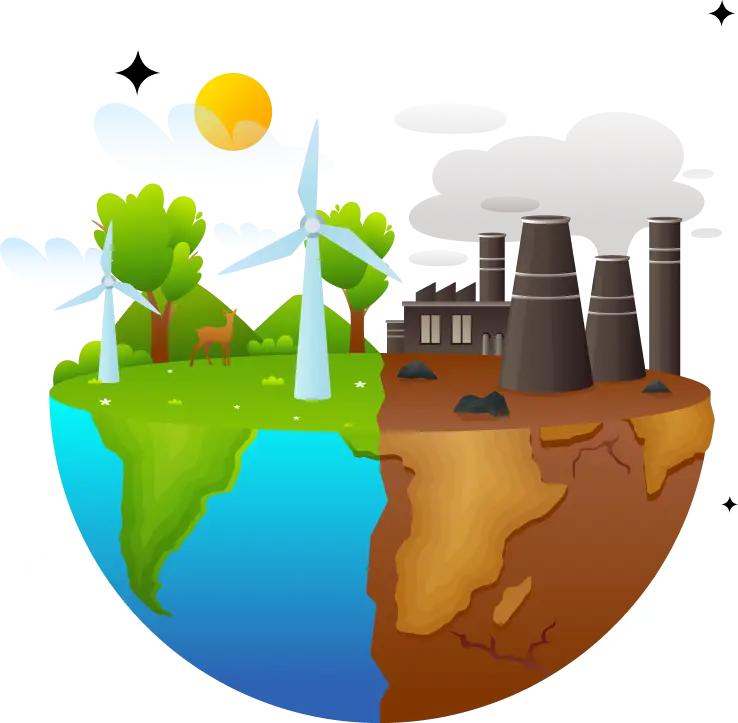
Organizations We Helped in Carbon Consulting




Trusted by
The Ministry of Commerce and Industry
Official CBAM Partner of SEPC and EEPC India


Is Your Project Carbon-Credit Ready?
Our preliminary assessment evaluates carbon credit trading project eligibility, methodology applicability, baseline, additionality, MRV readiness, estimated carbon potential and market feasibility.
Request a Carbon Project Feasibility Assessment:
Credible and certified sustainability carbon consulting platform
We closely work with the Ministry of Commerce and Industries to empower sustainable change. We launched a carbon cell with SEPC under the Ministry of Commerce and Industries to empower EU CBAM compliance and carbon accounting.
SEBI approved for
ESG
Certification

Cleancarbon.ai, is the Securities and Exchange Board of India (SEBI) approved carbon management platform to operate as an Environmental, Social and Governance (ESG) Rating Provider under Category II (IN/ERP/Category-II/0019). SEBI’s official data-driven ESG rating provider.
ISO 14001:2015
Certification
ISO 14001:2015 (Environment Management System) certified platform to validate and verify environmental, carbon and sustainability information, along with ensuring GHG inventories, carbon credits, CBAM reporting, and ESG disclosures.
ISO 9001:2015
Certification

ISO 9001:2015 (Quality Management System) certified and registered platform to conduct validation and verification of environmental, carbon, sustainability information, along with GHG inventories, carbon credits, CBAM reporting, and ESG disclosures.
ISO 14064-1:2018
Certification

ISO 14064-1:2018
(Greenhouse gases – Part 1: Specification with guidance at the organization level for
quantification and reporting of greenhouse gas emissions and removals) certified platform to validate and verify environmental, climate, and sustainability information, including greenhouse gas emissions, embedded emissions, carbon data, activity data, and calculation methodologies, for regulatory and compliance frameworks such as the eu carbon border adjustment mechanism (cbam), iso 14064 series, and other applicable international climate and environmental regulations, in accordance with iso/iec 17029 principles of impartiality and independence.
What CleanCarbon Does in Carbon Credit Project?
1. Carbon Credit Trading & Procurement
Access the right carbon credits for your business.
We source and facilitate transactions in verified carbon credits across voluntary and compliance markets, connecting credible supply with genuine buyer demand.
Our capabilities include:
- Carbon credit sourcing and procurement
- Buy-side and sell-side transactions
- Portfolio and inventory management
- Project and credit screening
- Transaction and delivery support
Focus: Reliable supply, transparent transactions, and commercially viable solutions.

2. Carbon Project Development
Turn climate projects into credible carbon assets.
We identify and support high-potential projects that can generate measurable environmental impact and carbon value.
Our work covers:
- Project identification and screening
- Feasibility and carbon potential assessment
- Project development support
- Carbon standard and methodology advisory
- Developer and technical partner coordination
- Market strategy for future carbon credits
Focus: We work across established and emerging carbon market frameworks to help projects move from concept to market-ready carbon assets.
3. Carbon Market & Climate Advisory
Helping businesses understand and act on carbon opportunities.
We help companies navigate carbon markets and integrate carbon strategies into their broader sustainability and decarbonization plans.
Our advisory capabilities include:
- Carbon market strategy
- Carbon credit procurement strategy
- GHG and carbon management support
- ESG and climate strategy
- CBAM-related carbon considerations
- Carbon market intelligence and opportunity assessment
Focus: Our approach is focused on practical, commercially relevant climate solutions.
4. Environmental Attribute Trading
Expanding beyond carbon credits to broader environmental attributes.
Where there is genuine market demand, we facilitate trading and procurement of environmental attributes such as International Renewable Energy Certificates (I-RECs) and Renewable Energy Certificates (RECs).
Focus: This enables businesses to address their renewable energy and sustainability requirements through a broader environmental commodities offering.
5. Global & International Carbon Markets
Preparing businesses and projects for the next generation of carbon markets.
We are building capabilities across emerging international carbon market mechanisms, including Article 6, to support future opportunities in cross-border carbon markets.
Focus: Our focus is on developing the knowledge, partnerships, project pipeline, and market access required to participate responsibly as these markets mature.

Who We Work With

Project Developers
Develop, certify and commercialise carbon projects.

Corporates & Buyers
Source carbon credits and environmental attributes aligned with procurement requirements.

Industrial & High-Emission Businesses
Build GHG inventories, carbon strategies and compliance pathways.

Investors & Asset Owners
Evaluate carbon projects and environmental-asset opportunities.

Technology Providers
Identify carbon value and market opportunities from climate technologies.

What Types of Projects We Do
| Project Category | Key Project Types / Examples | Typical Carbon Outcome | Area of Expertise / Involvement |
|---|---|---|---|
| 1. Renewable Energy | Solar PV, wind, small hydro, renewable power generation, captive renewable energy | Emission Reduction / Avoidance | Carbon project assessment, methodology screening, carbon quantification, registry pathway |
| 2. Bioenergy & Biomass | Biomass power, biomass boilers, biogas, CBG, waste-to-energy, biomass utilisation | Emission Reduction / Avoidance | Project feasibility, carbon accounting, methodology assessment, MRV |
| 3. Waste Management | Municipal solid waste, waste diversion, RDF, composting, recycling, landfill waste management | Emission Reduction / Avoidance | Methane avoidance, baseline assessment, carbon-credit feasibility |
| 4. Methane Management | Landfill methane, wastewater methane, manure, agricultural methane, biogas recovery | Emission Reduction | Methane quantification, project assessment, methodology & MRV |
| 5. Industrial Decarbonisation | Energy efficiency, fuel switching, waste-heat recovery, process optimisation, electrification | Emission Reduction | GHG accounting, emission hotspot identification, decarbonisation strategy, carbon-credit assessment |
| 6. Industrial Process Emissions | Cement, lime, steel, chemicals, mineral processing, process optimisation | Emission Reduction / Removal | Process-emission assessment, carbon accounting, methodology screening |
| 7. Steel & Mineral Carbon Removal | Steel slag carbonation, mineral carbonation, alkaline industrial residues, CO₂ mineralisation | Carbon Removal | CDR feasibility, CO₂ uptake assessment, methodology/registry identification, MRV & commercialisation |
| 8. Biochar & Biomass Carbon Removal | Agricultural-residue biochar, biomass pyrolysis, biochar soil application, biochar materials | Carbon Removal | Carbon removal assessment, feedstock evaluation, methodology screening, MRV |
| 9. Enhanced Rock Weathering (ERW) | Agricultural land application, crushed silicate minerals, mineral weathering | Carbon Removal | CDR project assessment, carbon accounting, monitoring framework, methodology assessment |
| 10. CCS / CCUS | Industrial CO₂ capture, geological storage, mineral storage, utilisation pathways | Carbon Removal / Emission Reduction | Carbon accounting, project feasibility, permanence & MRV assessment |
| 11. Carbon Removal – Engineered | Direct Air Capture (DAC), CO₂ mineralisation, durable carbon storage, carbonated products | Carbon Removal | CDR feasibility, methodology/standard assessment, MRV, certification pathway |
| 12. Agriculture & Soil Carbon | Regenerative agriculture, improved agricultural practices, soil organic carbon, residue management | Carbon Removal / Emission Reduction | Carbon quantification, project assessment, MRV & methodology screening |
| 13. Forestry & ARR | Afforestation, reforestation, agroforestry, restoration, improved forest management | Carbon Removal | Project feasibility, carbon estimation, certification & carbon-market assessment |
| 14. REDD+ / Forest Conservation | Avoided deforestation, forest conservation, jurisdictional forestry programmes | Emission Reduction / Avoidance | Carbon-credit assessment, methodology/standard review, market assessment |
| 15. Blue Carbon & Wetlands | Mangroves, coastal wetlands, seagrass, salt marshes, wetland restoration | Carbon Removal / Avoidance | Carbon-market assessment, project screening, MRV & certification pathway |
| 16. Clean Cooking & Household Energy | Improved cookstoves, electric cooking, efficient biomass cooking, fuel switching | Emission Reduction | Carbon-credit feasibility, methodology & MRV assessment |
| 17. Water & Wastewater | Industrial wastewater, municipal wastewater treatment, biogas recovery, methane capture | Emission Reduction | GHG accounting, methane quantification, carbon-credit assessment |
| 18. Circular Economy | Material recovery, recycling, industrial by-product utilisation, resource efficiency | Emission Reduction / Avoidance | Carbon-benefit assessment, project development & carbon monetisation |
| 19. Carbon-Neutral / Corporate Decarbonisation | Corporate GHG inventories, Scope 1–3, emission reduction programmes, carbon neutrality | Emission Reduction / Residual Compensation | GHG accounting, hotspot analysis, decarbonisation roadmap & certification advisory |
| 20. Carbon Credit Trading & Brokerage | Primary project credits, secondary-market credits, CDR credits, compliance/voluntary credits | Carbon Asset Monetisation | Carbon sourcing, buyer-seller facilitation, inventory assessment, commercialisation & trading |
Why Choose CleanCarbon.ai?
One platform. Multiple carbon market solutions.
Market Access
Connect with carbon credit supply and buyer demand across relevant markets.
Project Expertise
Identify and develop projects with strong carbon and environmental potential.
Commercial Approach
Combine climate impact with sound market and business fundamentals.
End-to-End Support
From project identification and credit sourcing to transaction and market strategy.
Global Perspective
Track evolving carbon markets, standards, regulations, and international opportunities.
Our Carbon Market Approach
From Climate Projects to Market-Ready Carbon Assets
We believe the future of carbon markets depends on integrity, transparency, measurable impact, and long-term value.
At CleanCarbon, we connect climate projects, carbon assets, businesses, and markets to help turn credible climate action into commercially viable opportunities. From project development and carbon quantification to certification, procurement, trading, and market access, we support clients across the carbon asset lifecycle.
Turning Climate Action into Market Value
Whether you are looking to develop a carbon project, source and procure carbon credits, build a carbon-market strategy, access environmental attributes, or explore international carbon markets, CleanCarbon provides the expertise and market connectivity to help you move from opportunity to execution.

Identify

Develop

Certify

Trade

Scale
Frequently Asked Questions
01 What is a carbon market?
A carbon market is a mechanism through which carbon credits or other authorized emissions units are issued, bought, and sold to support greenhouse gas (GHG) emission reductions. Carbon markets generally operate through two approaches: compliance markets, where participation is driven by regulatory obligations, and voluntary carbon markets, where organizations purchase eligible credits voluntarily to support their climate strategies.
02 What is a carbon credit?
A carbon credit is a tradable unit representing a quantified amount of greenhouse gas emissions reduced, avoided, or removed under an applicable carbon-crediting programme. The common unit is one metric tonne of carbon dioxide equivalent (1 tCO₂e). A credit’s quality and permitted use depend on the standard, methodology, registry, and applicable market rules.
03 What is the Voluntary Carbon Market (VCM)?
The Voluntary Carbon Market enables organizations and other buyers to purchase carbon credits without being legally required to do so under an emissions-trading obligation. Credits may originate from renewable energy, energy efficiency, methane reduction, waste management, nature-based solutions, biochar, and other eligible activities.
04 What is a carbon offset project?
A carbon offset project is an activity designed to reduce, avoid, or remove GHG emissions compared with an applicable baseline scenario. Before credits can be issued, the project must demonstrate additionality, establish a baseline scenario, undergo independent third-party validation, and complete ongoing monitoring, reporting, and verification (MRV).
05 What is the Indian Carbon Market (ICM)?
The Indian Carbon Market is India’s domestic framework for carbon credit trading, established under national legal and regulatory guidelines. It includes mechanisms designed to incentivize improvements in industrial emissions intensity and to support eligible project-based emission reductions or removals. The Bureau of Energy Efficiency (BEE) administers key implementation processes under the Carbon Credit Trading Scheme (CCTS).
06 What is the Carbon Credit Trading Scheme (CCTS)?
The Carbon Credit Trading Scheme (CCTS), introduced under the Energy Conservation Act, is India’s framework for carbon credit trading. It provides two principal mechanisms: the compliance mechanism for notified obligated entities with mandated emission-intensity targets, and the offset mechanism enabling non-obligated entities to register qualifying project activities for Carbon Credit Certificates.
07 Who is an obligated entity under CCTS?
An obligated entity is an industrial entity formally notified under the CCTS Compliance Mechanism and assigned a GHG emission-intensity target. It must monitor and report its performance and meet the applicable target for each compliance year. Operational status in an energy-intensive sector alone does not imply obligation without official government notification.
08 How can CleanCarbon.ai help organisations develop carbon credit projects?
CleanCarbon.ai supports project proponents across the full project lifecycle, including feasibility assessment, methodology screening, baseline calculations, MRV framework development, validation and verification coordination, registry registration, and carbon credit monetization strategies.
Build Your Next Carbon Asset With CleanCarbon
Whether you are developing a climate project, sourcing carbon credits, building a carbon strategy or entering environmental markets, our team can help you navigate the opportunity.
Latest Blogs

What a monitoring plan is, what the EU rules require it to contain, and what we have learnt writing them...

As the European Union’s Carbon Border Adjustment Mechanism (CBAM) transitions fully into its definitive phase, self-reported estimates and unverified calculations...
CBAM Compliance Guide 2026 for Indian Exporters – what you need to know before your next EU shipment. As international...