
Introduction
Mr. Shubham Thakur: Hello and welcome to CleanCarbon.ai, India’s end-to-end CBAM reporting platform. I’m Shubham Thakur, climate journalist and climate communications specialist. Today, we are discussing how the European Union’s Carbon Border Adjustment Mechanism (CBAM) is impacting the engineering export sector in India.
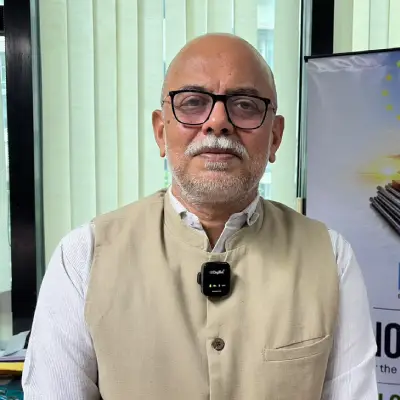
Joining me is a senior industry leader, Mr. Adhip Mitra, Executive Director and Secretary at EEPC India. Thank you so much for your time, sir. As you interact closely with industry experts and government officials, how is the Indian engineering sector responding to EU CBAM?
Mr. Adhip Mitra: Industry response is compulsory. The European Union is one of our top export destinations for engineering goods, and it is a market India simply cannot afford to lose. If Indian exporters want to continue trading with the EU, full compliance with CBAM is mandatory.
While the European Commission is unlikely to dismantle the core framework they have designed, the Government of India has actively presented its views. In several instances, European authorities have agreed to specific requests raised by India. It remains a continuous, evolving dialogue.
Global Expansion of Carbon Taxation
Mr. Shubham Thakur: It isn’t just the European Union—the UK is preparing its own CBAM, while Canada and Australia are examining similar carbon policies. In this context, do you expect global carbon taxation to significantly impact export competitiveness, particularly for sectors like fasteners and precision engineering?
Mr. Adhip Mitra: Indian exporters are certain about one thing: they want to retain the EU as a key export market, and European regulations are extremely strict. While it is unlikely that the EU will drop major clauses, India has made measurable progress—the situation is far more collaborative now than when discussions first started.
There is no doubt that carbon taxation is here to stay. Universally, we agree that global growth must be green; however, short-term commercial and trade interests often create friction against that green transition.
Operational Challenges for MSMEs & Certification Costs
Mr. Shubham Thakur: Based on your interactions across the sector, what are the primary operational challenges exporters face regarding CBAM reporting and compliance?
Mr. Adhip Mitra: Beyond environmental protection, there is an element of trade protectionism involved in these regulations. While theoretical policies aim to avoid protectionism, practical implementation on the ground tells a different story.
Initially, Indian industry was caught somewhat unprepared. While some exporters have initiated data collection, practical hurdles persist—such as whether Indian verification standards will be accepted by EU authorities. Obtaining carbon certifications from foreign verification agencies is prohibitively expensive for our Micro, Small, and Medium Enterprises (MSMEs), which directly threatens their cost competitiveness. However, because regional competitors face identical challenges, the playing field may ultimately balance out.
Strategic Guidance & Industry Readiness
Mr. Shubham Thakur: As Executive Director of EEPC India, what is your strategic message to exporters and industry bodies trying to preserve their global competitiveness?
Mr. Adhip Mitra: CBAM is a highly specialized regulatory framework. Serious exporters must study its technical details thoroughly and make decisions based on sound operational judgment and reliable expert guidance. That technical expertise needs to be systematically transferred to our broader exporter base.
It is a challenging task, and regulatory deadlines are fast approaching—CBAM certificate sales are scheduled to begin in September 2027. To remain competitive in international trade, companies must ensure their emissions reporting is fully up to mark.
EEPC India’s Role as the Nodal Agency
Mr. Shubham Thakur: EEPC India serves as the nodal agency guiding exporters through CBAM. How is the council actively assisting the industry?
Mr. Adhip Mitra: EEPC India engages continuously with its member exporters. We are focusing our member interactions, regional workshops, and seminars specifically on CBAM compliance. We bring in technical panels and industry experts to brief exporters on data requirements. Additionally, we have launched a dedicated CBAM portal on the official EEPC India website to provide foundational guidance, tools, and step-by-step frameworks to help businesses navigate these regulatory challenges.
Mr. Shubham Thakur: Thank you so much, Mr. Mitra, for sharing these critical insights with us today.
Mr. Adhip Mitra: Thank you.
Note: “EEPC India serves as the Government of India’s designated nodal body guiding iron, steel, and aluminium exporters through EU CBAM compliance.”