
Overview & Regulatory Background
Under the European Union’s Carbon Border Adjustment Mechanism (EU Regulation 2023/956), aluminium imports represent one of the primary targeted industrial sectors. Importers must declare embedded direct (Scope 1) and indirect (Scope 2) carbon emissions, alongside upstream raw material footprints (Scope 3 precursor emissions from aluminium ingots and primary billets).
New Delhi-based Fire Stone Metal Private Limited is a fast-growing manufacturer of precision aluminium extrusions and profiles. Certified with ISO 9001:2015 and IATF 16949:2016 (Automotive Quality Management), the company operates multiple high-tonnage extrusion press lines, supplying customized structural sections across automotive, architectural, industrial, and consumer markets in the European Union.
When an export shipment of aluminium profiles faced an emergency EU customs detention due to incomplete carbon accounting documentation, Fire Stone Metal partnered with CleanCarbon.ai to resolve the immediate logistics crisis and implement an automated, facility-wide CBAM data infrastructure.
Technical & Supply Chain Complexities in Aluminium Extrusions
Exporters of precision aluminium sections encounter unique technical hurdles under EU climate regulations:
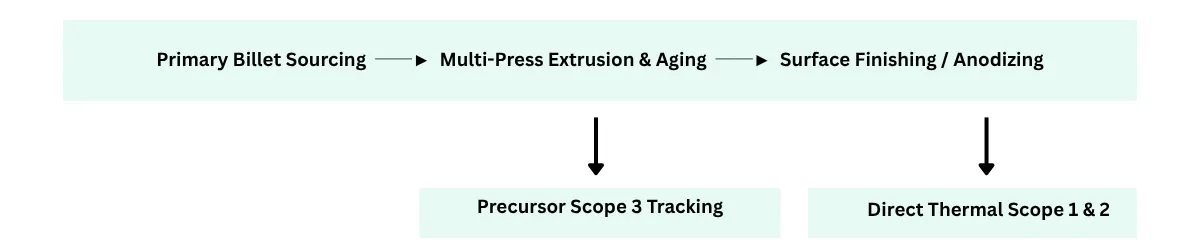
- Precursor Billet Footprint (Scope 3 Integration): Unlike basic steel processing, aluminium CBAM accounting mandates tracking upstream emissions from raw primary aluminum billets or recycled scrap feeds. Securing verified data from primary smelter suppliers required structured vendor onboarding.
- Multi-Press Thermal & Electrical Allocations: Operating high-speed extrusion presses, induction log heaters, and thermal aging ovens requires precise energy allocation across hundreds of distinct profile geometries to determine accurate Product Carbon Footprints (PCF).
- Specific Tariff Code Coverage: Exporting under CN Code 7604 (Aluminium Bars, Rods, and Profiles) and CN Code 7610 (Aluminium Structures and Parts) requires itemized reporting for EU buyer registry uploads. Missing verified data forces customs authorities to apply high EU default emissions values, artificially inflating carbon costs for buyers.
CleanCarbon.ai Rapid Resolution & System Implementation
CleanCarbon.ai executed a fast-track, three-month deployment starting with immediate customs intervention:
- Emergency Release Execution: CleanCarbon.ai ingested existing plant production logs, billet material certificates, and energy records to generate a verified, compliant CBAM declaration report, securing the release of the detained shipment at European port customs within days.
- Supplier Onboarding Portal: Deployed secure web-based submission tools and conducted structured workshops for upstream aluminium billet suppliers, building trust and accelerating primary vendor emissions data flow.
- Automated ERP & XML Integration: Connected plant ERP metrics directly to CleanCarbon.ai’s compliance engine, enabling automated quarterly XML file generation formatted specifically for direct upload to the EU CBAM Transitional Registry.
Measured Business & Operational Impact
The integration of CleanCarbon.ai delivered clear financial and administrative results for Fire Stone Metal:
| Operational Parameter | Manual / Incident Baseline | CleanCarbon.ai Integrated System |
| Customs Clearance Status | Shipment detained at EU port | Cleared in days; zero demurrage fees accrued |
| Compliance Overhead | High administrative burden across press lines | Automated real-time quarterly reporting engine |
| Billet Vendor Data Flow | Fragmented, unverified vendor logs | High supplier data submission rates via portal |
| Audit Status | High risk of default rate application | 100% audit-ready, GDPR-compliant datasets |
Executive & Vendor Testimonials
Frequently Asked Questions
Why are aluminium extrusions and profiles subject to EU CBAM?
Aluminium bars, rods, profiles, and structural sections under CN codes 7604 and 7610 are designated carbon-intensive goods under EU Regulation 2023/956. EU importers bringing these items into Europe must declare direct, indirect, and precursor embedded emissions.
How does precursor tracking impact aluminium CBAM calculations?
EU CBAM requires carbon declarations for aluminium to include the carbon footprint of the raw primary aluminium billets or ingots (precursors) used in the extrusion process. Declaring actual verified primary vendor data prevents buyers from being penalized with high EU default values.