
Key Discussion Highlights
- Impact on Export Competitiveness: How EU CBAM carbon tariffs alter price dynamics and market standing for Indian primary and secondary steel producers.
- EU Buyer Sentiment & Reactions: How European importers and trade partners are responding to data disclosure demands, embedded emissions reporting, and upcoming carbon tax liabilities.
- Supply Chain & Margin Pressures: How data collection hurdles, tier-1/tier-2 vendor tracking, and compliance costs squeeze profit margins across Indian steel supply chains.
- Navigating Compliance & Data Credibility: Practical approaches to building verifiable, audit-ready embedded emissions data to prevent EU port holds and customs delays.
- CBAM as a Market Expansion Opportunity: How proactive Indian exporters can leverage early decarbonization and verified carbon reports to capture market share from higher-emitting global rivals.
- Efficacy of Carbon Tariffs: Evaluating whether CBAM’s financial penalties will genuinely spur technological transformation and industrial emissions reductions in heavy manufacturing.
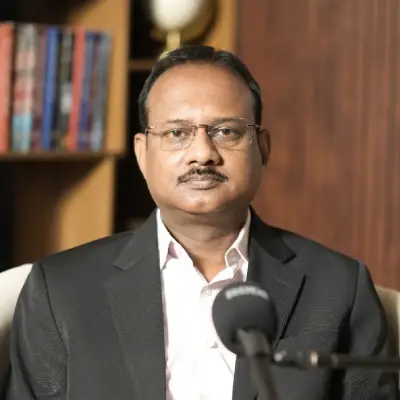
CBAM Interview with Mr. Ashwani Kumar Lal (Ex-Tata Steel)
Mr. Shubham Thakur: Welcome to CleanCarbon.ai. Yet another interesting podcast on sustainability and how climate change is impacting businesses and the economy. I am Shubham Thakur, climate journalist and climate communications specialist. And today, I have with me a very experienced, knowledgeable, and interesting personality: Mr. Ashwani Kumar Lal, former Chief of Steel Exports at Tata Steel. He has worked with Tata Steel for about 35 to 36 years. We’ll be talking to him to understand how businesses impact the economy, with a focus on the EU CBAM, which has been creating a lot of ripples in the Indian iron and steel sector.
Mr. Ashwani Kumar Lal: Thank you, Shubham. It’s a privilege. I’m very happy to be sharing my knowledge and experience with someone like you.
Mr. Shubham Thakur: In your experience, do you think climate change is impacting how we have been doing businesses conventionally for decades? If yes, how is it impacting imports, exports, and the economy?
Mr. Ashwani Kumar Lal: Standing today, it is much more than compliance. It has become a responsibility of nations,businesses, and citizens. The impact of climate change is now direct and straight on businesses. One of the big things is CBAM, where the EU has taken the lead in saying that we are all responsible for whatever we are doing.
Mr. Shubham Thakur: Do you think the climate question is taken seriously in boardroom discussions?
Mr. Ashwani Kumar Lal: Yes, if I talk about the steel industry, it is very much a part of boardroom discussions.Sustainability is a subject which has the top management’s attention.
Mr. Shubham Thakur: Coming to EU CBAM, we are in the mandatory reporting phase from January 2026. How do you think it is impacting the iron and steel sector’s export competitiveness?
Mr. Ashwani Kumar Lal: About a year back, the level of confidence we could give customers was extremely low. No one wanted to take a risk, so things were at a standstill. Once the methodology came up, it was purely about the confidence Indian suppliers could give to European customers. If you are able to calculate your CBAM numbers correctly,you can avoid the default value, which is very high. It was a very tough period for Indian suppliers, but everyone was clearly focused on overcoming these disruptions.
Mr. Shubham Thakur: What was the sentiment from European importers?
Mr. Ashwani Kumar Lal: Importers in Europe typically had an arbitrage of 70–80 between domestic and import prices.With the carbon tax, that arbitrage would shrink. However, European customers built stocks before CBAM hit, so the disruption didn’t impact the whole ecosystem. By February or March, we were back in business because management attention shifted to learning the subject and building confidence.
Mr. Shubham Thakur: Thank you so much, sir, for your time.
Mr. Ashwani Kumar Lal: Thank you, Shubham. Thank you for having me. It is a privilege and a very proud moment for me. This is my first podcast.