The most carbon-intensive products and items are cbam sectors during the ongoing mandatory reporting phase. Here is a look at all the cbam applicable sectors.
CBAM Sectors: The European Union Carbon Border Adjustment Mechanism is currently under the mandatory reporting mode and it applies to six extremely carbon-intensive CBAM sectors. The logic behind only covering six CBAM sectors including iron and steel, aluminium, cement, fertilisers, hydrogen and electricity is their high carbon intensity. Gradually, the scope of cbam applicable sectors will increase as per the EU ETS. In this blog, we will look at sectors covered by BAM:
CBAM Applicable Sectors
Currently, cbam sectors focus on areas and products that pose the greatest risk of carbon leakage, carbon-intensive nature and wide usages.
CBAM sectors are:
- Iron and Steel
- Aluminium
- Cement
- Fertiliser
- Hydrogen
- Electricity
There many products and items made of iron and steel covered under the CBAM reporting. These can be identified with the help of lists of HSN codes published by the EU under the CBAM.
Iron and Steel
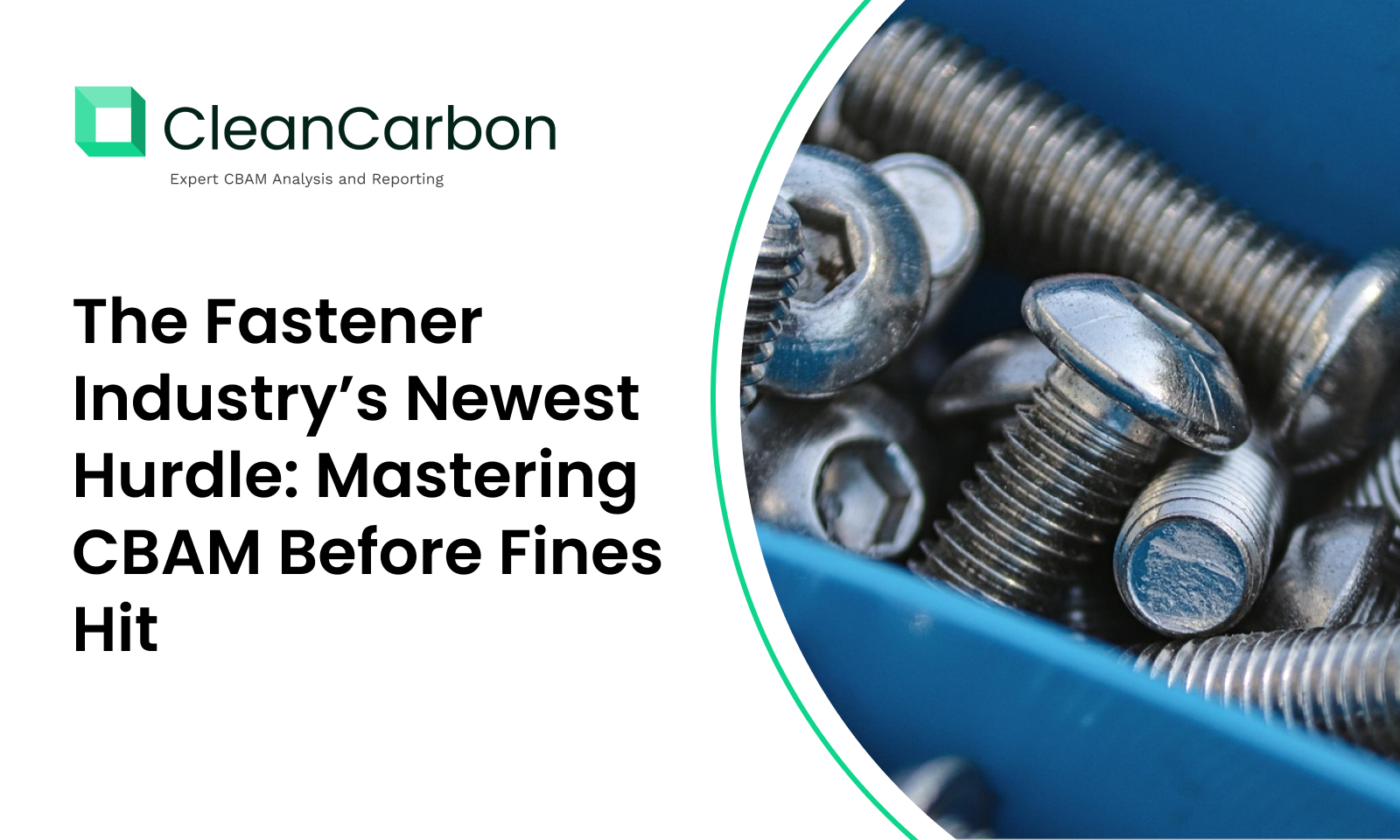
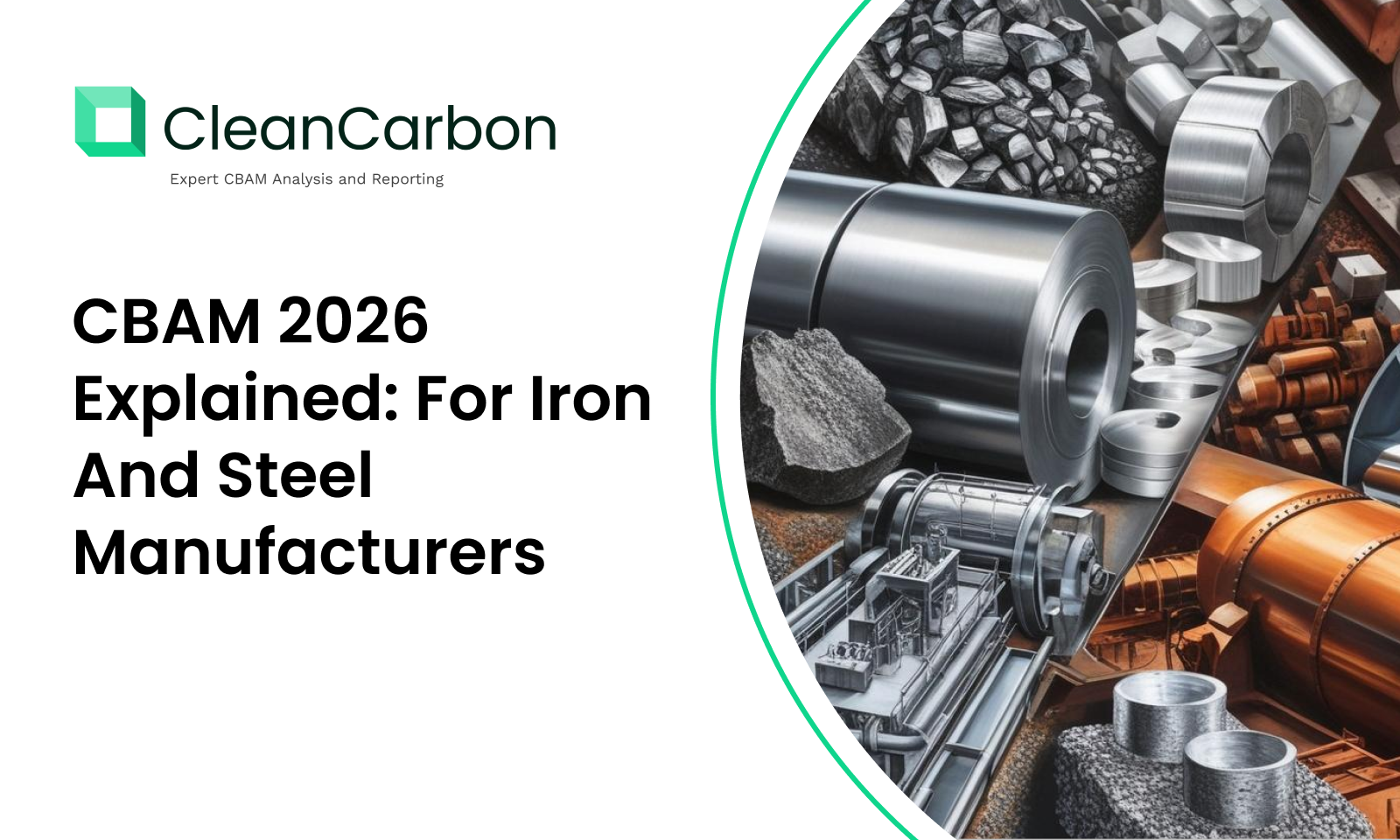
Since iron and steel is one of the most carbon-intensive sectors and also widespread, the HSN code list is long and comprehensive. Items covered within the cbam sectors include iron bars, road, rails, wires, tubes, plates, tanks, drums, bolts, nuts, screw drivers, tractor parts, iron sheets, hollow profiles, cast iron, automotive items and much more.
Other CBAM sectors covered are sheet piling of iron or steel, welded angles, shapes and sections, of iron or steel. The list also covers Railway or tramway track construction material of iron or steel, check-rails and rack rails, switch blades, crossing frogs, point rods and other crossing pieces, sleepers (cross-ties), fish- plates, chairs, chair wedges, sole plates (base plates), rail clips, bedplates, ties and other material specialised for jointing or fixing rails.
Others items under the sectors covered by CBAM are reservoirs, tanks, vats, tanks, casks, drums, cans, boxes, coach screws, screw hooks, rivets, cotters, cotter pins, washers (including spring washers) and similar articles, of iron or steel.
Aluminium
Aluminium is one of the most carbon-intensive sectors covered by cbam. The list includes items such as unwrought Aluminium, Aluminium powders and flakes, Aluminium bars, rods and profiles, Aluminium wire, Aluminium plates, sheets and strip, Aluminium foil, Aluminium tubes and pipes.
Aluminium tube or pipe fittings (for example, couplings, elbows, sleeves), Aluminium structures (excluding prefabricated buildings of heading 9406 ) and parts of structures (for example, bridges and bridge-sections, towers, lattice masts, roofs, roofing frameworks, doors and windows and their frames and thresholds for doors, balustrades, pillars and columns); aluminium plates, rods, profiles, tubes and the like, prepared for use in structures, Aluminium reservoirs, tanks, vats and similar containers, for any material, are covered under CBAM sectors.
Other products Aluminium CBAM sectors are Aluminium casks, drums, cans, boxes and similar containers (including rigid or collapsible tubular containers), for any material (other than compressed or liquefied gas), of a capacity not exceeding 300 litres, whether or not lined or heat-insulated, but not fitted with mechanical or thermal equipment.
Cement
EU CBAM covers a range of products under cement. The official list includes cement clinkers, white portland cement, aluminous cements, kaolinic clays and more. It is a highly carbon intensive sector with complex production processes.
Fertiliser
Fertiliser is one of the important cbam sectors. It covers products like Nitric acid, sulphonitric acids, Ammonia, anhydrous, Nitrates of potassium, Mineral or chemical fertilisers, nitrogenous Hydrogen and Electricity are two more sectors that must submit their CBAM report.
Challenges for cbam applicable sectors
There are different challenges for different cbam sectors and all of them are very complex and highly technical in nature. Let’s look at them one by one:
Example 1: Iron and steel
Iron and steel are the most carbon-intensive in nature and require a lot of work for accurate data collection. If the suppliers do not submit accurate and verified direct and indirect emissions data, their EU buyers could face CBAM tax or penalties. A big supplier of iron and steel products from India suffered blockage of shipments at the EU border as the emissions data were (1) not submitted on time, (2) the data was not accurate. This means penalty for late and inaccurate submissions besides the carbon tax applicable on that shipment.
Example 2: Aluminium
For aluminium products, there could be an inflated CBAM tax when suppliers decide to use the default values which are deliberately punitive and the highest for Indian suppliers. Aluminium product’s production processes are energy hungry and the processes are also very technical in nature. Most of them also lack systematic data collection infrastructure and that means high reliance on use of default values.
Example 3: Cement
For cement manufacturers from India, it could be difficult to even predict their carbon tax, which can be made easier by CleanCarbon.ai’s advanced analytics. This means challenges in business expansion in the EU market and also hurdles in making EU export business CBAM-proof amid the global trade wars and geopolitical uncertainties.
CBAM Reporting Checklist for Suppliers
EU CBAM is very complicated and highly technical compliance that puts emphasis on data accuracy. Here is a list 0f 10 CBAM reporting checklist for suppliers.
- Check CBAM applicability for your products: As a supplier, you must cross check if your product and its HSN code is listed under CBAM reporting. This can be done by comparing your HSN code against the published CN codes under the CBAM.
- Identify production processes: Under this, suppliers must understand the production processes and techniques used for manufacturing the CBAM listed product.
- Direct emissions: Suppliers are mandated to collect direct emissions for CBAM report generation. Direct emissions are carbon emitted at the facility level during production processes.
- Indirect emissions: Under the CBAM reporting framework, suppliers have to collect and submit indirect emissions. For example, a company must give details of electricity consumed during the manufacturing processes.
- Precursors & supply chain data: All emissions details of the vendors and third-party suppliers are also required under the CBAM reporting requirements.
- No use of default values: Suppliers should not use default values and must depend on actual emissions. This is because the usage of defaults values can inflate CBAM tax for buyers in Europe.
- Verification readiness: All suppliers must maintain all data records and ensure they have adequate CBAM data collection trails with them. Not facilitating EU-approved data verification can invite penalties for the suppliers and importers.
- Proper documentation: Proper documentation of records including accurate details of production processes, raw material usages, fuel purchase and consumption logs, energy bills, emissions calculation spreadsheets among other details must be stored safely to prove accuracy.
- Engage with importer: Every supplier must engage with the importer in the EU on a regular basis to ensure seamless CBAM compliance. Suppliers must select only Authorised CBAM Declarants for CBAM compliance.
CBAM Reporting Checklist for Importers
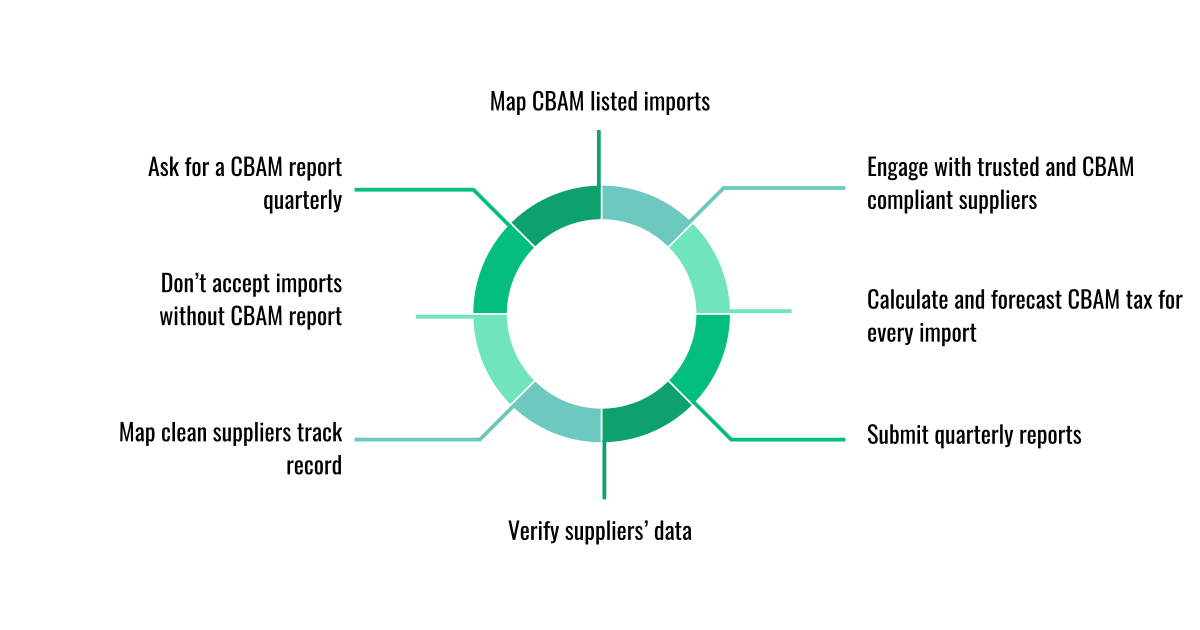
The responsibility to comply with CBAM lies primarily with importers. Hence, importers must be careful in ensuring CBAM compliance. Here is a list of 8 CBAM reporting checklist for suppliers:
- Map CBAM listed imports: First thing is to map all imports and identify which imports fall under CBAM reporting. It is important to understand whether your imported product falls under the CBAM listed category or not.
- Ask for a CBAM report quarterly: Every importer must ask for a quarterly CBAM report from all the suppliers whose products fall under the CBAM.
- Don’t accept imports without CBAM report: No importers should accept imports of any product without CBAM report. If importers show any leniency regarding CBAM reports on the supplier, then they will have to pay a penalty and higher CBAM tax.
- Map clean suppliers track record: Importers could map and maintain a list of suppliers that do accurate CBAM compliance. This can be done with the help of IndiaCBAMRegistry.org which is backed by India’s premier trade and export promotion organisations such as the Services and Exports Promotion Council of India, EEPC India and FICCI under the Ministry of Commerce and Industries.
- Verify suppliers’ data: Every importer must verify its suppliers’ emissions submitted to it. If this is not done since the start, then the importers could face penalties for inaccurate CBAM reports, and increased CBAM tax.
- Calculate and forecast CBAM tax for every import: Maintain a track record for every import and calculate tax for each quarterly report. This helps in advance planning and maintaining CBAM readiness for continuous business with the EU.
- Submit quarterly reports: Every EU buyer must submit quarterly CBAM reports to avoid any kind of penalty and do risk-free business.
- Engage with trusted and CBAM compliant suppliers: Importers should prefer engaging with CBAM compliant suppliers to maintain trade continuity and risk their ongoing business.
How can CleanCarbon.ai help in CBAM sector specific reporting?
India’s CBAM-first reporting platform CleanCarbon.ai has years of experience in CBAM reporting. The platform focuses on CBAM only and hence it has the market leadership in accurate CBAM compliance. It is the only platform that can engage with all the local vendors of the CBAM reporting supplier to gather all data points and also allows highly specific tax predictions for its partners. Moreover, companies can easily understand their CBAM taxes and also reduce them for uninterrupted business with the EU.
What are the sectors covered by cbam?
Currently, only the six most carbon-intensive sectors are covered by the EU CBAM. These include iron and steel, aluminium, cement, fertilisers, hydrogen and electricity. Under these sectors, products such as tubes, bars, wires, casks, nuts, bolts, screws and many more such items fall under the cbam applicable sectors.
Can cbam applicable sectors scope expand?
As CBAM matures over the coming years, more goods and sectors from the EU ETS will fall under the cbam applicable sectors category.
How to find if my product falls under the cbam sectors?
The European Union Commission has published the list of all cbam applicable sectors as per their HSN/CN code. These products differ as per their specifications and carbon intensity. Suppliers can match their product’s HSN code against the published list by the EU and understand whether their exported item falls under the CBAM reporting or not.